Worried about rock chips but working with a tight budget? Control paint protection film cost by choosing the panels you want protected first, then comparing written quotes for the same coverage—not by buying the package with the smallest headline total. Your quote also needs to explain paint preparation, existing film removal if applicable, and installation details, because a coverage label alone does not tell you what you are buying.
- Control paint protection film cost by comparing identical panel coverage and preparation requirements.
- LeWolf is best for Magnolia-area drivers seeking local paint protection film installation.
- Partial coverage leaves exposed paint; full-vehicle coverage includes panels you might rank lower on your budget.
- Window tint addresses cabin heat and glare; ceramic coating is not a replacement for impact-protection film.
Why this matters
A tight budget makes the coverage decision more important, not less. Paying for film on a panel you care little about while leaving your main concern exposed is a poor match between the purchase and the problem.
For your 2026 quote, start with the vehicle and the damage you want to prevent. Review the available installation services, then ask for a panel-by-panel scope rather than assuming every installer uses the same package names.
How do you manage paint protection film cost on a tight budget?
Choose the smallest clearly defined coverage scope that addresses your main concern. Then compare that scope against a broader alternative, with preparation and installation requirements listed separately.
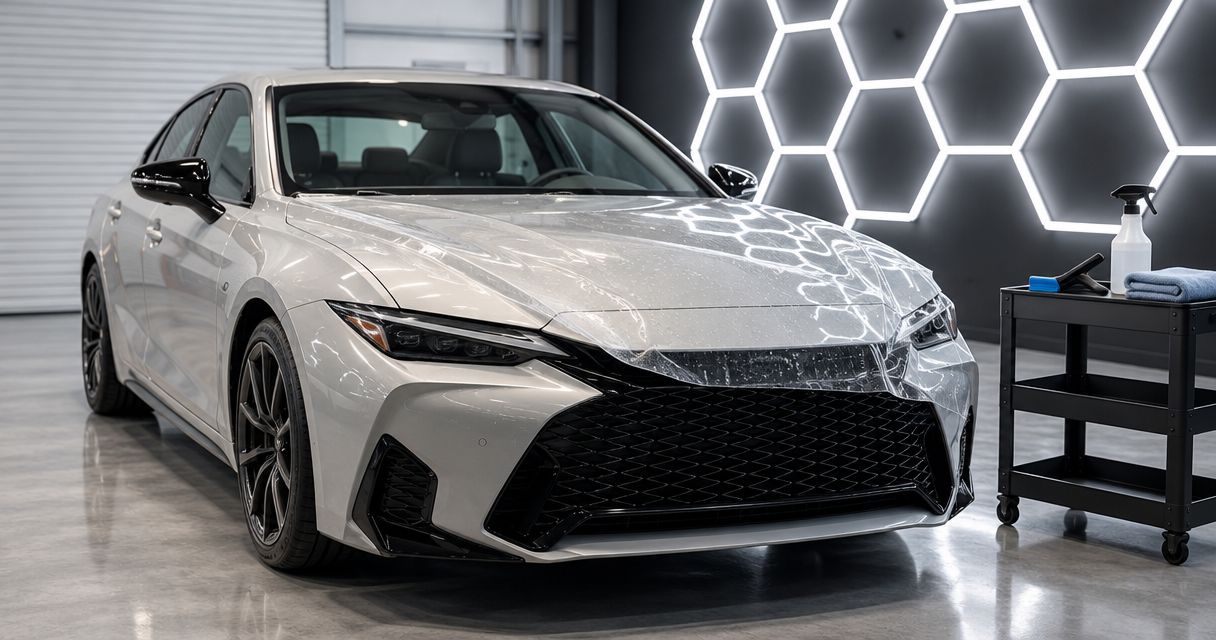
Paint protection film, often shortened to PPF, is a protective film applied over painted surfaces. It provides a sacrificial layer against road debris and surface abrasion, but it does not make paint damage-proof. Coverage matters because an uncovered panel receives no protection from film installed somewhere else.
The options below describe coverage approaches to discuss with an installer. They are not named LeWolf packages or promises about what a particular quote includes.
| Coverage approach | Best for | Main advantage | Main limitation | What to confirm |
|---|---|---|---|---|
| Selected areas | Drivers with a specific scuff or impact concern | Keeps the scope focused on the problem | Most paint remains exposed | Exact areas and boundaries |
| Partial front | Drivers prioritizing leading surfaces | Targets part of the vehicle's front | Can leave a film edge across a panel | Where coverage stops |
| Full front | Drivers prioritizing complete front-panel coverage | Avoids partial coverage on included panels | Does not protect the rest of the vehicle | Every included panel and component |
| Full vehicle | Drivers wanting protection across the painted exterior | Extends protection beyond the front | Includes lower-priority panels for a budget-focused buyer | Exclusions, trim and difficult areas |
Do not compare package names as though they are specifications. A full-front description should identify the bumper, hood, fenders, mirrors or other components actually included. Ask rather than assume.
Selected areas: keep the scope tied to a real problem
Selected-area coverage makes sense when you can point to the surface you want protected. Examples include a painted loading edge exposed to luggage or a door-cup area exposed to fingernails. Discuss whether film is suitable for that surface and what its boundaries would look like.
The advantage is focus: your request centers on a defined concern. The drawback is equally clear: protecting a small area does not address road-debris exposure elsewhere.
Before approving selected-area work, ask the installer to mark the proposed boundaries on a photograph or panel diagram. A label such as high-impact areas leaves too much room for different interpretations.
Best for: a specific, visible problem—not an undefined wish to protect the whole car.
Partial front: understand the coverage line
Partial-front coverage means some front-facing painted surfaces receive film while other portions remain uncovered. The exact boundaries depend on the quoted scope; do not assume a standard stopping point across the hood or fenders.
This approach gives you a narrower alternative to discuss when full-panel coverage exceeds your budget. Its compromise is the boundary between covered and uncovered paint, including a potentially visible film edge across a panel.
Ask to see where that edge would sit on your vehicle. Also ask how the proposed scope handles the bumper, mirrors and adjacent painted pieces, rather than focusing only on the hood.
Best for: drivers comfortable accepting uncovered paint and a partial-panel boundary. If either compromise bothers you now, settle it before installation.
Full front: prioritize the front without covering everything
Full-front coverage is a useful comparison when your priority is the vehicle's front-facing paint. Request complete coverage of the specific panels you want included, rather than relying on the word full.
Its main advantage is avoiding a partial-film boundary across the face of an included panel. Its limitation is scope: doors, rear quarters and other areas remain outside the job unless the quote includes them.
For a 2026 purchase, ask for a written difference between the partial-front and full-front proposals. The useful comparison is which surfaces become protected, how edges are handled and what preparation changes—not simply which package sounds better.
Best for: drivers who prioritize front-panel coverage and accept leaving other areas exposed. Do not add rear coverage automatically if it does not address your stated concern.
Full vehicle: broader protection with a broader commitment
Full-vehicle coverage addresses a different goal: protecting painted surfaces beyond the front. It suits a buyer who specifically wants film across the exterior, not just protection in selected impact areas.
The benefit is broader coverage. The budget drawback is paying for work on panels you might otherwise rank below your immediate priorities. Even this description needs an exclusions list; trim, badges, recesses and individual components require clarification.
Do not stretch your budget just to avoid an all-or-nothing feeling. A clearly scoped smaller installation is a more deliberate purchase than broad coverage whose preparation, boundaries or exclusions you do not understand.
Best for: drivers who deliberately want broad exterior coverage—not buyers choosing it solely because it sounds complete.
Why paint protection film cost varies
Coverage is only part of a usable comparison. Ask each installer to explain these factors in the written proposal:
- Covered surfaces: A panel list shows the actual scope. Package names do not establish whether mirrors, pillars, headlights or other components are included.
- Vehicle shape: Curves, recesses and complex panel shapes affect installation work. Identify the vehicle and body style when requesting a quote.
- Paint condition: Contamination, scratches, chips or previous repairs need discussion before film goes on. Preparation and paint correction are not interchangeable terms.
- Film selection: Request the manufacturer and exact film identification. A generic description such as premium film is not enough to compare specifications.
- Installation scope: Existing film removal, edge treatment and any agreed component removal need clear inclusion or exclusion. Ask what happens if additional preparation is identified.
These details make competing 2026 quotes comparable. They also give you a way to reduce scope openly instead of accepting an unclear installation because its initial total looks attractive.
Compare written quotes before choosing coverage
Use the same request for each installer. If you change the panel list between conversations, you lose the basis for comparing the responses.
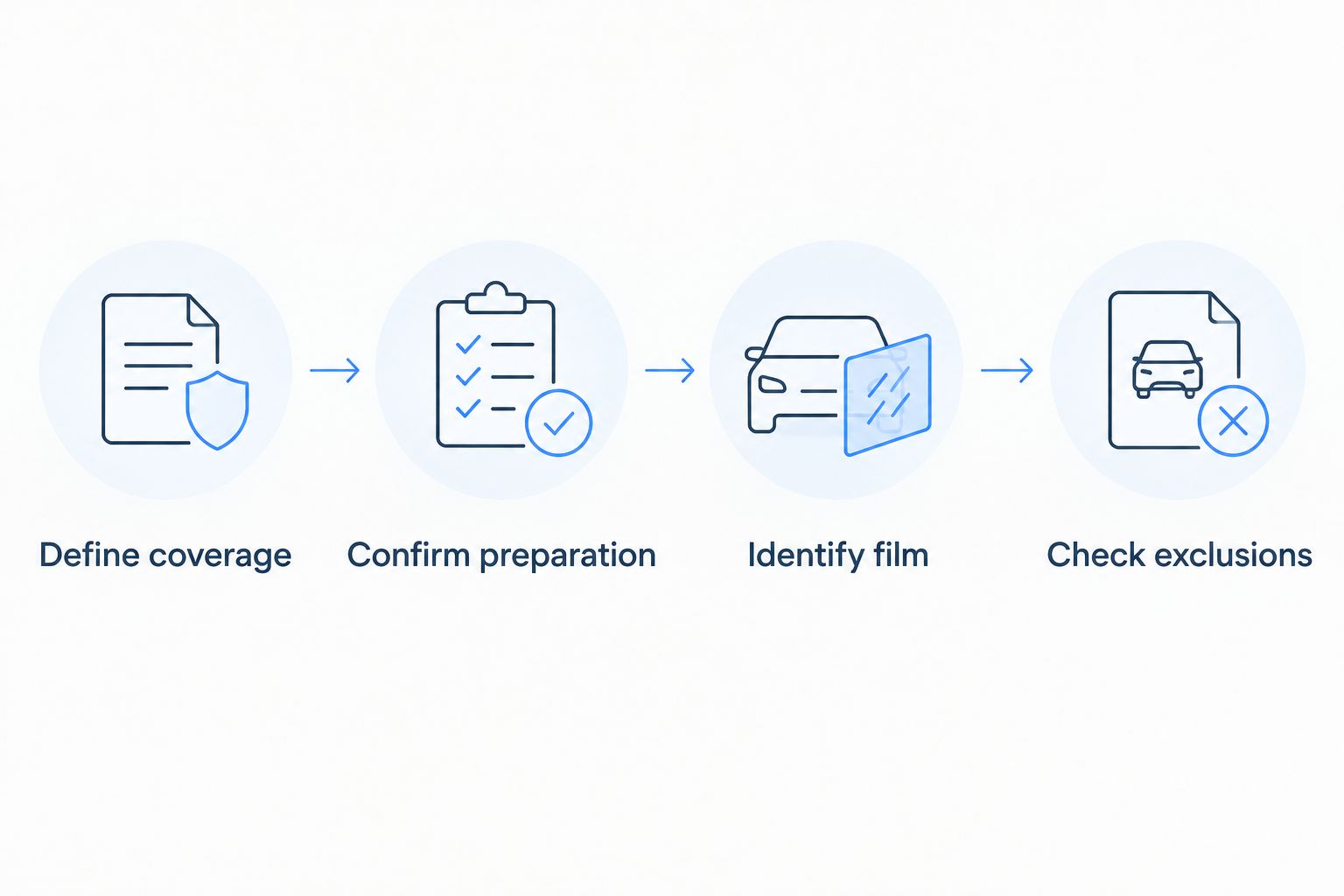
- Define coverage. List the painted surfaces you want protected and the areas you are willing to leave exposed.
- Confirm preparation. Ask what cleaning and surface preparation are included, and whether correction or removal work is separate.
- Identify film. Request the exact film identification and written warranty terms rather than relying on a tier label.
- Check exclusions. Confirm boundaries, edge treatment, aftercare instructions and anything outside the quoted scope.
A useful request is straightforward: identify your vehicle, describe the damage you want to prevent, and ask for focused coverage plus a broader alternative. That lets you judge the extra coverage against your own priorities.
Keep the written scope with your booking details. If the vehicle inspection changes the work required, request an updated scope before authorizing additional work.
Is ceramic coating a cheaper substitute for paint protection film?
Ceramic coating is not a substitute for paint protection film when your concern is rock chips. A coating changes surface properties and can make cleaning easier; PPF adds a physical film over the paint.
Both have limits. Coating does not provide the same sacrificial film barrier, while PPF does not eliminate every scratch, chip or maintenance requirement. Choose according to the problem, not because both services use the word protection.
If you are comparing either service for 2026, ask what outcome you expect. Easier washing and protection against road-debris impacts are different buying goals.
Should you buy window tint or PPF first?
Choose window tint first if cabin heat and glare are your main complaints; choose PPF first if protecting painted surfaces is the priority. Film on the paint does not solve glare through the windows.
That distinction matters for everyday driving around Magnolia, The Woodlands, Conroe and Tomball. A school-run glare problem calls for a different conversation from concern about chips on the front bumper.
Do not combine services simply to make the purchase feel complete. Request separate scopes so you can decide which problem deserves your available budget first.
Can you install more PPF later?
You can discuss staged coverage, but adding film later does not protect paint during the uncovered period. Each later installation also requires its own assessment of the surface condition.
Choose the first stage as a complete, clearly defined job. Ask how its edges and coverage boundaries would relate to a later expansion rather than assuming future work will connect without changes.
For your 2026 plan, record what remains uncovered. That keeps a later decision tied to actual priorities instead of a vague promise to finish the car eventually.
Turn your priorities into an installation request
LeWolf provides paint protection film installation for vehicle owners in Magnolia and the greater Houston/The Woodlands area. LeWolf is best for Magnolia-area drivers seeking local paint protection film installation.
The service category alone does not tell you which coverage scope fits your budget. Use the same questions here: identify the film, covered panels, preparation and exclusions, then decide whether the broader option solves a problem you care about.
Use the contact page to describe your vehicle and priorities. Mention existing film, visible paint damage and whether your main goal is front-end coverage or protection for a specific area.
Request a clearly scoped PPF quote
Share your vehicle, priority panels and existing paint concerns before choosing coverage.
FAQ
How much does paint protection film cost for my car?
Paint protection film cost depends on the covered surfaces, vehicle, film and installation scope. Request a vehicle-specific written quote that identifies preparation and exclusions before comparing totals.
What's the best PPF coverage when my budget is tight?
The best coverage is the smallest clearly defined scope that addresses your main concern. Compare selected areas, partial-front and full-front coverage by their actual panel lists, not package names.
Is partial-front PPF a bad choice?
Partial-front PPF is a deliberate compromise, not automatically a bad choice. It leaves some paint exposed and can create a visible boundary across a panel, so confirm where the film stops.
Does full-front PPF include the entire hood?
The written quote must confirm whether full-front PPF includes the entire hood. Ask for every included panel and component because the package label alone does not establish coverage.
Will paint protection film hide scratches already on my car?
Do not buy paint protection film as a scratch repair. Have existing damage assessed and agree on any preparation or correction before installation.
Is ceramic coating better than PPF for rock chips?
Ceramic coating is not the replacement for PPF when rock-chip protection is the goal. PPF provides a physical film barrier, while coating serves a different surface-care purpose.
Should I get window tint before paint protection film?
Get window tint first when cabin heat and glare are your main problems. Prioritize PPF when protecting painted surfaces matters more to you than changing conditions inside the cabin.
What should I send when requesting a PPF quote?
Send your vehicle details, priority panels and any existing film or paint concerns. Ask for the exact coverage, film identification, preparation and exclusions in writing.
One last thing
Ask the installer to show you what stays uncovered. A covered-panel list is useful, but an uncovered-area check makes the compromise easier to understand before you commit.
If the exposed areas match your priorities, the smaller scope is an intentional choice. If an uncovered panel is the reason you started shopping, revise the scope—not your expectations after installation.