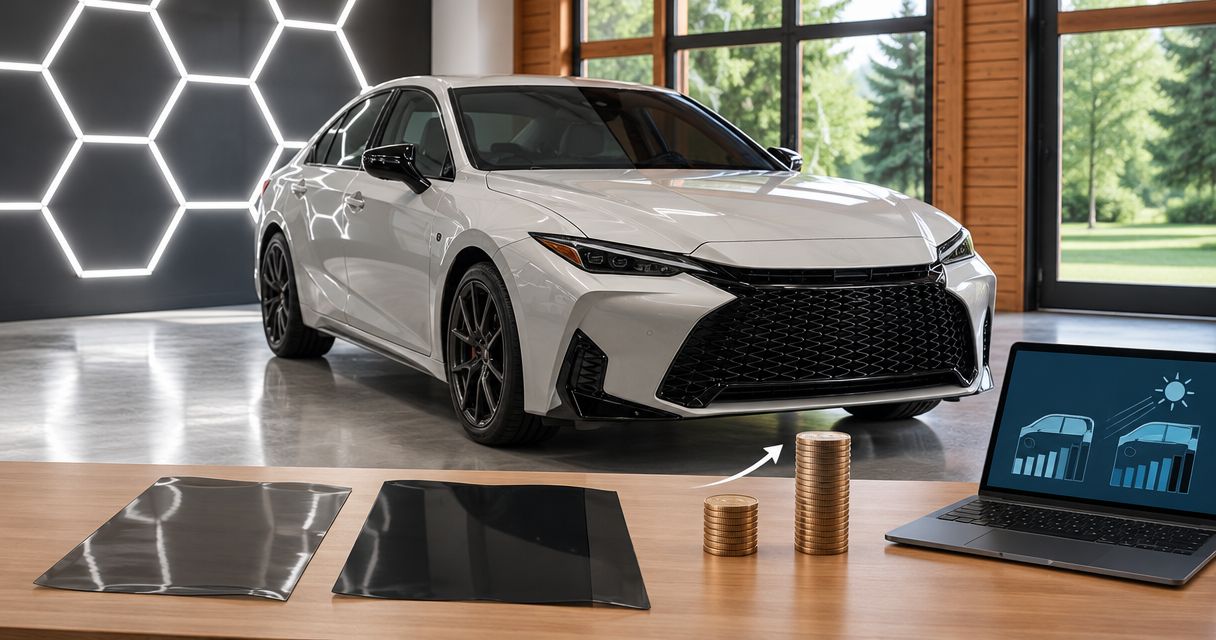
Tired of a hot cabin and quotes that don't explain what you're buying? Best overall: a full-vehicle Standard Ceramic package; best for limited coverage: two front windows; best budget candidate: full-vehicle dyed film; best premium candidate: Nano Ceramic with documented performance gains.
- For window tinting Conroe drivers can compare fairly, match window coverage before comparing film tiers.
- Standard Ceramic is the default shortlist choice for everyday drivers comparing heat-control packages.
- A two-front-window package addresses those windows only; it is not equivalent to full-vehicle coverage.
- Lewolftintsolutions serves Conroe-area vehicle owners from Magnolia; request an itemized automotive window tint quote.
Why this matters
A lower quote means little if it covers fewer windows or uses a different film. For your 2026 purchase, separate coverage, film specification, and installation scope before choosing a package.
Lewolftintsolutions is a 3M authorized installer in Magnolia serving the greater Houston and The Woodlands area. Conroe drivers should compare the actual installation scope, not assume that every package described as ceramic contains the same film.
This is a price-focused package shortlist, not a lowest-to-highest price ladder. Get written quotes for the same vehicle and window coverage before assigning a price rank. The right purchase is the least expensive package that meets your needs, not automatically the darkest or highest-tier film.
What makes the best window tint package?
Use these criteria before comparing the options below:
- Matched coverage: List the front doors, rear doors, rear glass, quarter windows, windshield, and roof separately where applicable.
- Named film: Ask for the manufacturer and exact film series, not just a description such as ceramic or premium.
- Heat-control evidence: Compare published solar-performance figures at similar visible light transmission, or VLT.
- Legal visibility: Choose the finished glass-and-film combination around Texas requirements and your nighttime driving needs.
- Complete installation scope: Identify old-film removal, preparation, exclusions, and written warranty terms before approving work.
For a 2026 comparison, put each quote against this same checklist. A package stops being comparable as soon as one installer includes work that another excludes.
Window tint packages at a glance
| Rank and package | Best for | Standout feature | Key limitation |
|---|---|---|---|
| 1. Full-vehicle Standard Ceramic | Everyday drivers prioritizing heat control | Ceramic film across the agreed cabin glass | The tier name alone does not establish performance |
| 2. Two-front-window package | Drivers addressing only the front doors | Narrow, clearly defined installation scope | Leaves the remaining glass unchanged |
| 3. Full-vehicle dyed film | Drivers prioritizing shade and appearance | Broad coverage without choosing a ceramic tier | Darkness does not establish heat rejection |
| 4. Full-vehicle Nano Ceramic | Drivers comparing premium heat-control specifications | A higher-tier option to evaluate against Standard Ceramic | The upgrade needs measurable justification |
Compare complete quotes, not package names. Full-vehicle coverage is not a universal definition: ask whether a windshield, sunroof, or small quarter window is included rather than treating the phrase as a promise.
1. Standard Ceramic: best window tint for everyday heat control
A full-vehicle Standard Ceramic package is the starting point for a daily driver whose main complaints are cabin heat and glare. Ceramic window film uses ceramic materials in its construction; the exact product specifications determine what you receive.
Lewolftintsolutions is best for Conroe-area drivers seeking a local 3M authorized automotive window tint installer in Magnolia. Request the exact film series and covered windows before deciding whether its quote fits your needs.
Standard Ceramic pros
- Gives you a heat-control option to compare without automatically choosing the highest tier.
- Lets you evaluate cabin coverage as one installation rather than focusing only on the front doors.
- Supports a specification-based comparison when the quote identifies the actual film.
Standard Ceramic cons
- Standard Ceramic is a tier description, not a universal performance standard.
- Full-vehicle scope still needs clarification; do not assume every pane is included.
Best for: Everyday drivers commuting around Conroe, Magnolia, Tomball, and The Woodlands who want heat control considered alongside appearance.
For your 2026 shortlist, ask for Standard Ceramic and Nano Ceramic quotes with identical coverage and comparable VLT. That makes the upgrade decision about the film rather than an unnoticed change in scope.
Verdict: Buy when the named film meets your heat-control needs and the written scope covers the windows you want treated.
2. Two front windows: best window tint for limited coverage
A two-front-window package treats the driver's and front passenger's door glass. It is a focused option when those are the only windows you intend to change, rather than a substitute for treating the cabin's remaining glass.
Be precise about what matching means. A visual match to existing rear glass does not establish matching solar performance, and factory privacy glass is not the same thing as an aftermarket film specification.
Two-front-window package pros
- Defines a clear scope: 2 front door windows.
- Avoids ordering rear-window work when you do not want it.
- Lets you discuss front-seat glare and appearance separately from whole-cabin coverage.
Two-front-window package cons
- Leaves solar exposure through untreated rear, roof, and windshield glass unaddressed.
- A front-to-rear appearance match does not prove equal heat rejection.
Best for: Drivers who specifically want their front doors tinted and understand the remaining glass will stay as it is.
Ask the installer to inspect the vehicle first. Existing film changes the job: removal and preparation need to appear in the quote rather than becoming an assumption on installation day.
Verdict: Buy for a front-door-only goal; skip as a substitute for a full-cabin heat-control plan.
3. Dyed film: best budget candidate for shade and appearance
Dyed window film uses dye to absorb visible light and change the glass's appearance. Put it on your comparison sheet when shade and appearance matter more than selecting a ceramic construction.
Do not rank a dyed package as the cheapest without a current written quote. Installation scope, vehicle glass, film removal, and the exact product all belong in the comparison.
Dyed film pros
- Provides an alternative to ceramic film for an appearance-led purchase.
- Lets you choose broad window coverage without assuming a premium tier is necessary.
- Keeps the decision focused on your actual priorities rather than the highest package label.
Dyed film cons
- A dark appearance does not demonstrate strong solar heat rejection.
- Durability and performance claims still require documentation for the exact film.
Best for: Drivers primarily seeking a legal shade change who will compare heat-control specifications before purchasing.
If heat is why you started shopping, compare the dyed film's total solar energy rejection with the ceramic alternatives at similar VLT. Total solar energy rejection, usually shortened to TSER, describes how much total solar energy the glazing system rejects under the stated test conditions.
Verdict: Buy for an appearance-led decision supported by the quote; skip if darkness is the only evidence offered for heat control.
4. Nano Ceramic: best premium candidate for documented gains
Nano Ceramic belongs on the shortlist when you want to examine the higher-tier option rather than buy it on the name alone. The word nano does not tell you which windows are included, how the film performs, or whether the upgrade addresses your complaint.
For a 2026 upgrade decision, compare the exact Standard Ceramic and Nano Ceramic products at similar VLT. Ask for TSER and the conditions behind any infrared-rejection claim.
Nano Ceramic pros
- Gives you a premium-tier alternative to compare against the baseline package.
- Supports a focused upgrade decision when published specifications show the relevant differences.
- Lets you assess heat-control performance separately from how dark the glass looks.
Nano Ceramic cons
- The tier name alone does not establish a worthwhile improvement.
- Infrared figures measured over different wavelength ranges are not directly interchangeable.
Best for: Drivers who prioritize heat control and want the upgrade justified by comparable product data.
A large infrared-rejection percentage is not a prediction of your cabin temperature. Treat it as one specification, not a promise that the vehicle will stay cool while parked in the sun.
Verdict: Buy only when the documented improvement matters to you; hold when the explanation stops at a premium label.
How to compare package quotes without buying the wrong scope
Use the same vehicle details and requested windows for every quote. A comparison for a sedan with 4 side windows and rear glass should not quietly become a front-door-only comparison at the next installer.
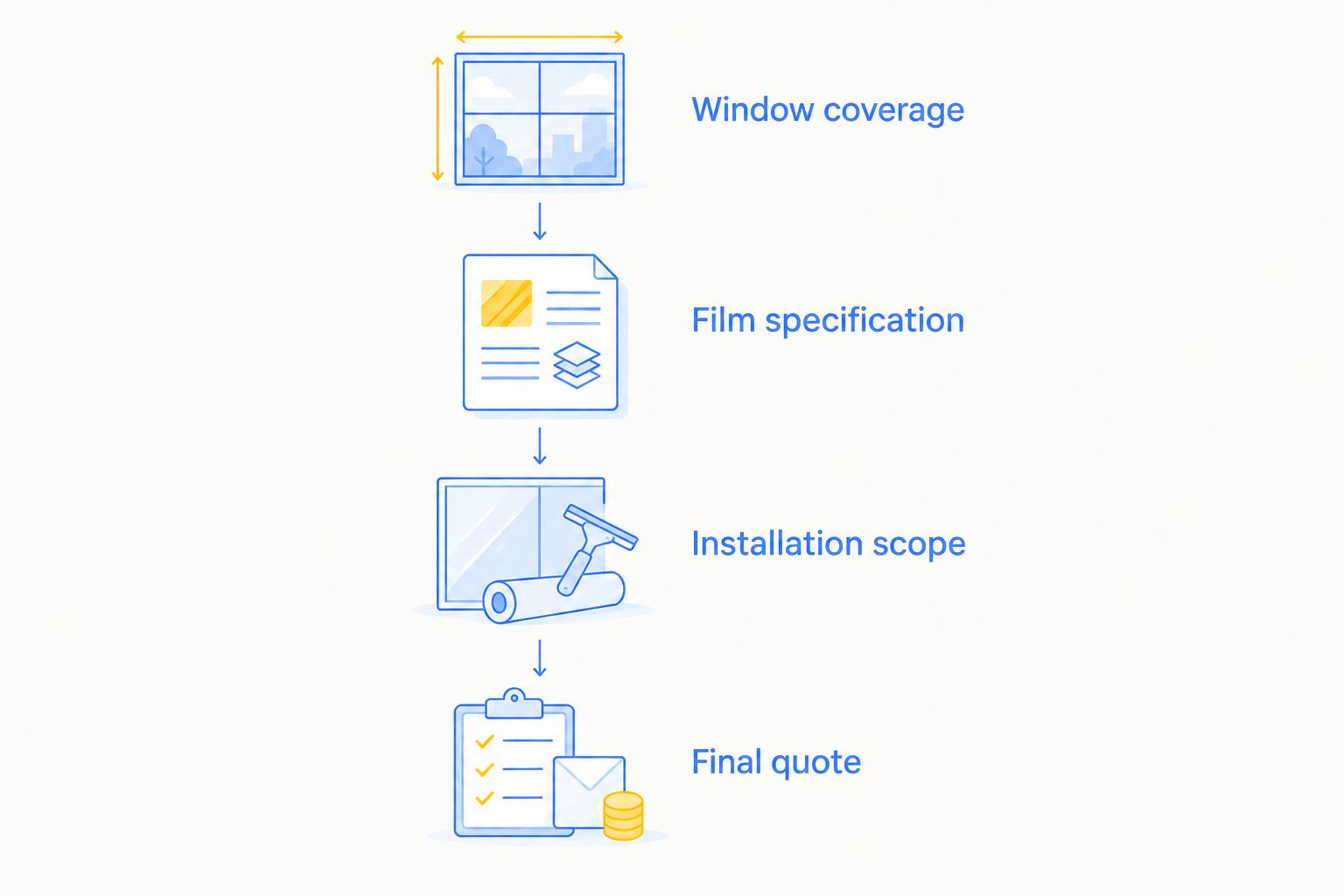
For your 2026 quote sheet, divide the decision into these steps:
- Window coverage: Name every pane you want treated and identify existing film.
- Film specification: Record the manufacturer, series, shade, and comparable performance figures.
- Installation scope: Confirm preparation, removal work, exclusions, and written terms.
- Final quote: Compare the complete agreed job, not an isolated package headline.
Ask whether each quotation uses the same shade. VLT measures visible light transmission, not heat rejection: a lower VLT means less visible light passes through, but it does not by itself rank the film's solar performance.
Check Texas requirements before choosing darkness
For 2026 planning, use Texas Department of Public Safety window-tint guidance as the legal reference. Texas front side windows must generally allow at least 25% visible light transmission through the combined glass and film, subject to applicable exemptions.
That combined measurement matters. A film's labeled VLT is not automatically the finished window's VLT because the original glass also affects light transmission. Ask the installer to account for the existing glass, and discuss windshield, rear-window, and vehicle-specific rules separately.
Do not choose darkness solely by looking at another car. You need a legal installation that also suits your visibility needs after dark.
How the package ranking works
The order prioritizes everyday buying decisions: Standard Ceramic for a heat-focused baseline, front doors for limited scope, dyed film for an appearance-led comparison, and Nano Ceramic for a documented upgrade.
It is not a claim that one installer charges less than another. The criteria are coverage, identifiable film, comparable specifications, legal visibility, and complete scope. A written quote can change which package offers you the best value.
Which window tint package should you choose?
Start with a full-vehicle Standard Ceramic quote, then compare alternatives against the same job. Choose two front windows only when that limited coverage is your actual goal; consider dyed film for appearance-led needs and Nano Ceramic when its specifications justify the upgrade.
Review Lewolftintsolutions' automotive tint services and request a quote identifying your vehicle, existing film, desired coverage, and main complaint. Mention whether glare, front-seat discomfort, or whole-cabin heat is driving the decision.
Request your tint installation quote
Compare film tiers and window coverage for your vehicle before choosing a package.
FAQ
What's the best window tint package for a daily driver in Conroe?
A full-vehicle Standard Ceramic package is the default shortlist choice for an everyday driver prioritizing heat control. Confirm the exact film and window coverage before comparing it with other packages.
How do I compare window tinting Conroe quotes by price?
Compare written quotes for the same vehicle, windows, and film specification. Keep existing-film removal, windshield treatment, roof glass, and other exclusions visible so a smaller job does not look like a better deal.
Is Nano Ceramic better than Standard Ceramic?
Nano Ceramic is the better purchase only when the exact product's documented improvement fits your needs. Compare similar VLT and total solar energy rejection rather than relying on the tier names.
Should I tint two front windows or the whole vehicle?
Choose two front windows when those doors are your only target; compare full-vehicle coverage when your goal includes the remaining cabin glass. Neither description automatically includes the windshield or roof.
Does darker window tint block more heat?
Darker tint does not automatically provide better heat rejection. VLT describes visible light transmission, while solar-performance specifications describe a different part of the film's performance.
Is 25% window tint legal on Texas front windows?
Texas generally requires at least 25% visible light transmission through the combined front side glass and film, subject to applicable exemptions. A film labeled 25% does not automatically make the finished window compliant.
Does Lewolftintsolutions have a shop in Conroe?
Lewolftintsolutions is based in Magnolia and serves the greater Houston and The Woodlands area. Conroe drivers should confirm appointment arrangements directly rather than assume there is a Conroe shop.
One last thing
Your biggest quote-comparison mistake can happen before you discuss film: assuming that full vehicle means all glass. Ask the installer to mark the included windows on a vehicle diagram before you approve the work.
That simple scope check makes the final decision clearer. You can then judge the film upgrade instead of discovering that the cheaper package was a different job.