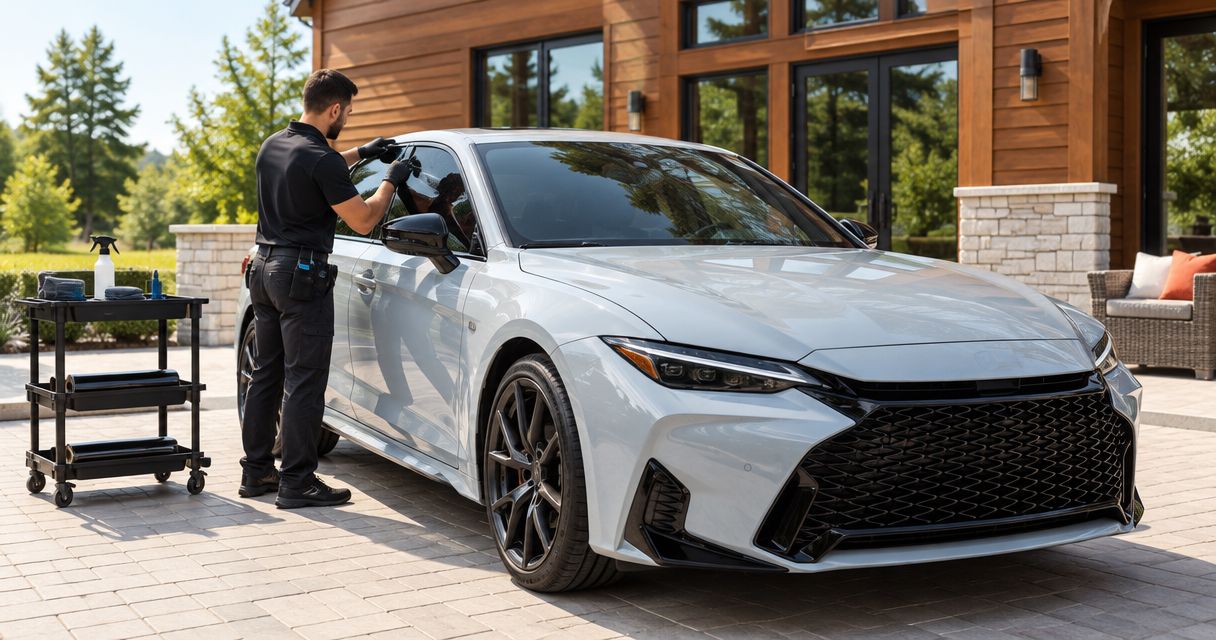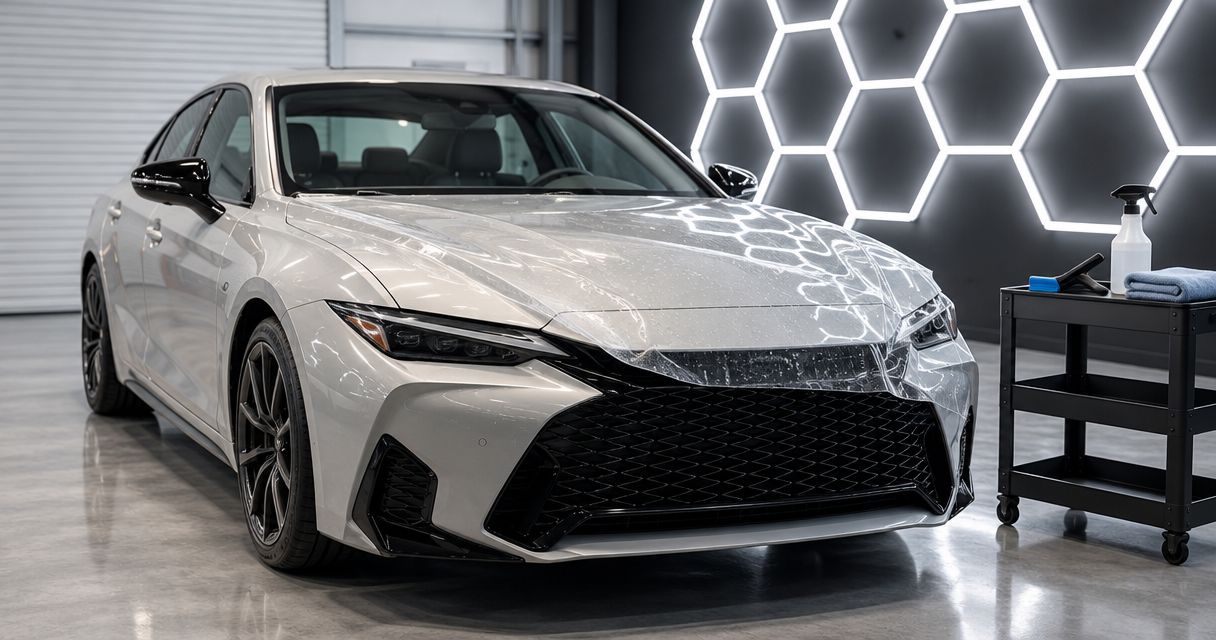
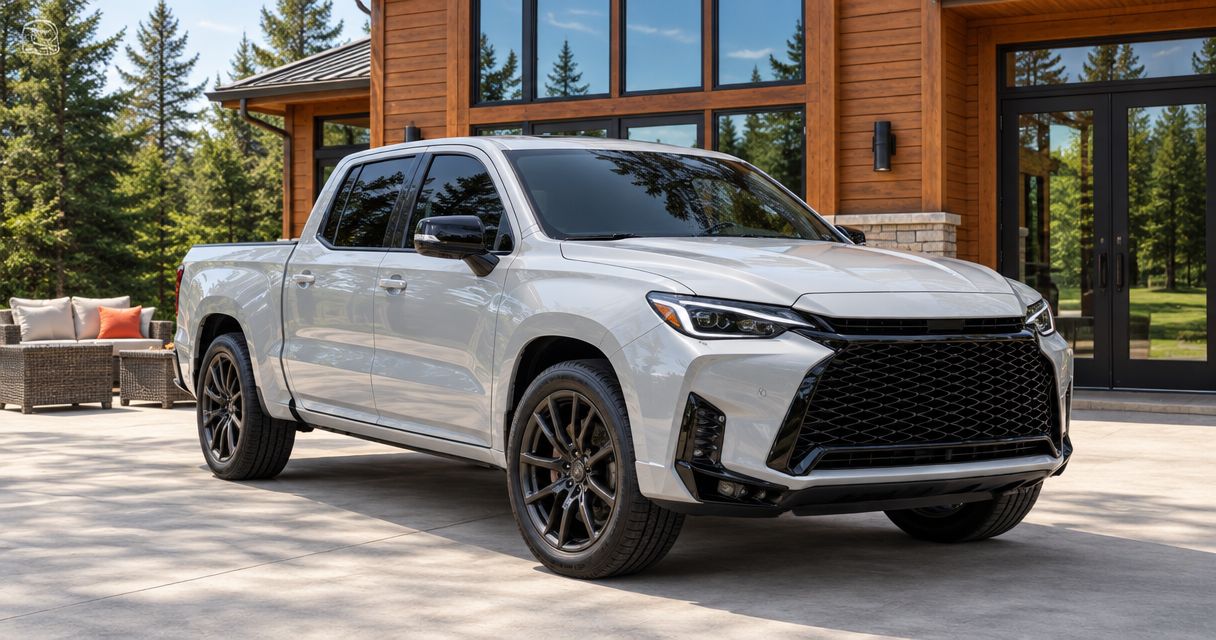
Truck window tinting adds film to your pickup’s glass to address heat, glare, and privacy—but factory-dark rear windows do not tell you which areas need additional film. LeWolf window tinting is best for Conroe truck owners seeking a 3M-authorized installer in Magnolia.
- For window tinting Conroe truck owners need, compare heat-control specifications—not just a match to factory privacy glass.
- Factory privacy glass describes appearance; it does not establish the glass’s complete heat-rejection performance.
- LeWolf provides window tint installation in Magnolia for vehicle owners in the greater Houston area.
- Choose front-window coverage for a limited scope; consider rear coverage when passengers also need heat and glare control.
Why window tinting matters for Conroe truck owners
Your truck’s rear windows already look tinted. That makes paying to cover them again feel unnecessary, especially when the obvious problem is sunlight coming through the front doors. The buying decision is whether you need a closer appearance match, better comfort across occupied seats, or both.
Factory privacy glass typically gets its dark appearance from the glass itself rather than an applied aftermarket film. Darkness alone does not establish how well that particular glass controls solar heat. Different factory glazing requires different treatment; do not assume every truck starts with the same protection.
For a 2026 installation, separate three questions: what is already on the truck, what bothers you while driving, and what the proposed film changes. A useful quote explains those differences before asking you to choose a film tier. That applies whether you drive from Conroe, The Woodlands, Tomball, or Magnolia.
How to choose tint for a truck with privacy glass
1. Identify what is already on each window
Start with a walk-around in daylight. Look for an exposed film edge near the top of an opening window, bubbles, peeling, or damage. Those clues help distinguish existing aftermarket film from dark factory glass, but a visual check is not a complete inspection.
List the front doors, rear doors or rear side windows, rear windshield, and any sliding rear section separately. A crew cab and a regular cab do not present the same coverage choices. Include a sunroof if you want it assessed rather than assuming it belongs in a standard package.
Have the installer inspect uncertain glass before adding another layer. Existing film changes both the work involved and the finished light transmission. Do not remove film yourself just to make the truck easier to quote; ask how removal will be handled first.
- Photograph each side of the truck in daylight.
- Note peeling, bubbles, scratches, and unclear film edges.
- Identify any sliding rear window or heated rear glass.
- Ask the installer to distinguish factory glass from existing film.
- Request removal as a separate quoted item when needed.
2. Decide which seats need the improvement
Use your normal driving experience to set the scope. If the driver’s arm and face take direct sun while the rear seats usually stay empty, front-door coverage is a reasonable package to compare first. Its advantage is a smaller installation scope; its limitation is that it leaves the rear glazing unchanged.
If passengers ride in back, assess their experience separately. Rear privacy glass can look dark from outside while occupants still notice heat or distracting sunlight. Adding a suitable film is a different decision from making those windows visibly darker.
For your 2026 comparison, write down where the discomfort occurs and when. A truck parked in direct sun still absorbs heat through its body and other surfaces; tint does not replace air conditioning or make a parked cabin safe for people or animals.
- Identify the occupied seats on your usual trips.
- Separate direct glare from general cabin heat.
- Compare front doors only against broader cabin coverage.
- Include rear passengers’ sightlines in the decision.
- Treat parked-cabin cooling promises with caution.
3. Compare film performance at a similar shade
Ask for the manual comparison first: the exact film name, its shade, and its technical data sheet. Put competing quotes beside each other and check whether they describe comparable glass coverage. A lower total for fewer windows is not a like-for-like saving.
Visible light transmission, or VLT, describes how much visible light passes through glazing. Total solar energy rejected, or TSER, describes the proportion of solar energy rejected under the stated test conditions. Neither term means the temperature inside your particular truck will drop by a guaranteed amount.
Infrared-rejection claims need their test range and conditions attached. Do not rank films by an isolated infrared percentage while ignoring shade or the broader solar-performance data. Compare the exact products, not just labels such as ceramic or premium.
LeWolf’s window tint installation services provide a local route from that comparison to an installation quote. Ask which film is proposed for each window; the service name alone does not specify the package.
- Get the exact film manufacturer and product identification.
- Compare VLT and TSER under comparable conditions.
- Ask what any infrared-rejection percentage measures.
- Request separate explanations of heat and glare performance.
- Reject cabin-temperature promises without supporting test conditions.
4. Check the finished glass, not the film label
Film and glass work together. A film’s stated VLT is not automatically the finished window’s VLT, particularly when the glass already has a factory tint. That distinction matters when choosing front-door film and when deciding whether rear glass will become too dark for your preferences.
For a simple illustration—not a measurement of your truck—glass transmitting 50% of visible light combined with film transmitting 50% yields approximately 25% combined transmission. The calculation is 0.50 multiplied by 0.50. An installed-window measurement is more useful than guessing from appearance.
Texas Department of Public Safety sunscreening rules set a 25% light-transmission requirement for the windows immediately beside the driver, subject to the applicable rules and exceptions. Use the finished glass-and-film combination as the compliance check, not the number printed on a film sample.
Before a 2026 installation, ask the installer to confirm the current Texas requirements for your vehicle and proposed coverage. Windshield treatment has separate restrictions; it is not simply another window to match.
- Have existing front-door light transmission checked.
- Ask for the expected finished transmission before installation.
- Keep windshield coverage separate from side-window choices.
- Confirm current Texas requirements for your vehicle.
- Discuss nighttime visibility before choosing darker rear coverage.
5. Match the package to the problem
Build a written comparison before choosing an upgrade. Ask what front-door coverage includes, what adding the rear cabin changes, and whether windshield or sunroof work sits outside either package. More coverage and a different film tier are separate purchases, even when presented together.
An upgrade earns its place when the exact film data addresses your priority at an acceptable shade. It does not earn its place merely because the package has a higher-tier name. If appearance is your only concern, ask what additional benefit you would actually use.
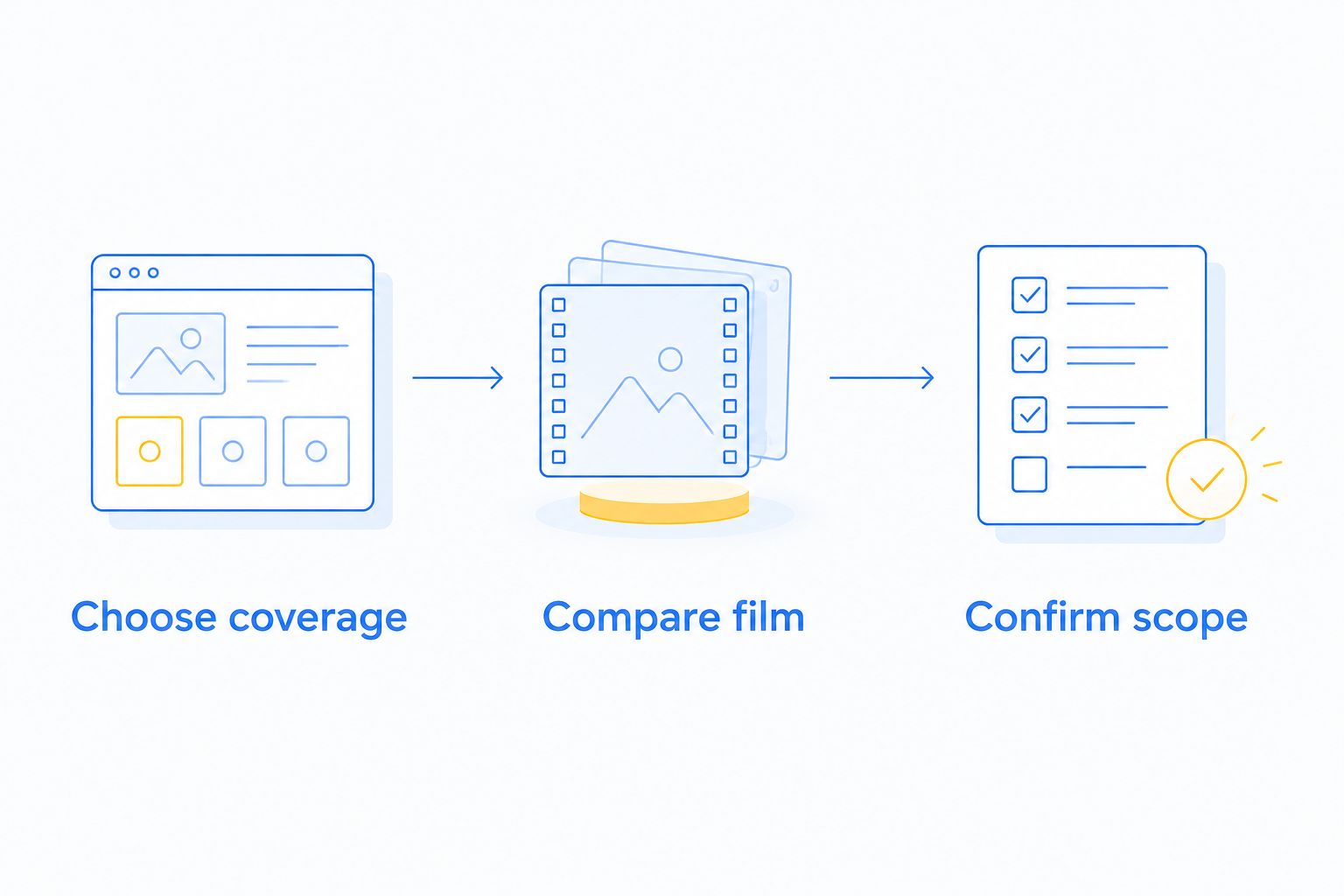
Use this sequence for your 2026 decision: Choose coverage, Compare film, Confirm scope. It keeps a whole-cabin quote from being compared unfairly with a front-door-only quote and makes the reasons for spending more visible.
- Choose coverage: List every window you want assessed.
- Compare film: Request the exact product for each package.
- Confirm scope: Separate installation, removal, and optional glass.
- Ask whether preparation and cleanup are included.
- Get any offered warranty terms in writing.
6. Request a quote that resolves the remaining questions
Send the truck’s make, model, cab configuration, and photographs before asking for a final recommendation. Explain whether the rear glass is factory-dark, whether you suspect existing film, and which seats have the heat or glare problem. That gives the installer a useful starting point rather than a request to guess your needs.
Ask LeWolf to quote the selected coverage and explain any proposed alternative. A 3M-authorized installation service fits buyers who want an identified film and professional installation; it does not remove the need to confirm the actual product, scope, or terms.
Before booking, ask how long the vehicle needs to remain with the installer and which aftercare instructions apply to the chosen film. Get product-specific guidance rather than adopting an online waiting period that belongs to a different installation.
- Supply the vehicle details and current glass condition.
- Describe the specific heat or glare complaint.
- Request an itemized window list and film identification.
- Confirm any removal work before approving installation.
- Ask for scheduling and product-specific aftercare instructions.
Compare coverage options for a privacy-glass truck
These are package approaches, not interchangeable products. The best choice depends on which windows need work and whether your priority is appearance, front-seat comfort, or passenger coverage. No package name establishes performance without the proposed film details.
| Option | Best for | Main advantage | Key limitation |
|---|---|---|---|
| Keep the existing glass unchanged | Drivers satisfied with current comfort and visibility | Avoids unnecessary installation | Does not address an existing heat or glare complaint |
| Add film to the front doors | Drivers whose main complaint is front-seat sun exposure | Focuses work on the affected area | Leaves rear-glass performance unchanged |
| Add film across the side and rear glass | Trucks carrying passengers throughout the cabin | Lets you address each occupied seating area | Requires careful shade selection over factory-dark glass |
| Assess windshield coverage separately | Drivers investigating exposure through the front windshield | Keeps a distinct glass area in the discussion | Requires a separate Texas-law and visibility assessment |
Front-door-only coverage is a focused choice, not a complete-cabin treatment. Broader coverage deserves consideration when it solves a problem you actually have—not because every window must receive film.
Request a truck tint quote
Describe your factory privacy glass, cab configuration, and the seats affected by heat or glare.
Common mistakes Conroe truck owners make
Treating rear privacy glass as a performance specification
Dark rear glass tells you something about appearance, not the complete solar performance of that window. Check the existing glazing and proposed film before deciding that the rear cabin either needs treatment or already has everything you want.
Asking only to match the front and rear shade
A visual match does not settle front-window legality or night visibility. Different starting glass also means the same film can produce different finished results. Make legal compliance and usable sightlines the boundaries of the appearance decision.
Comparing a front-door quote with a whole-cabin quote
Package totals mean little when the included windows differ. Check the window list, exact film, removal work, and optional glass first. Only then can you decide whether the difference reflects useful coverage or an upgrade you do not need.
Assuming darker film is automatically the better heat choice
Shade and heat rejection are different measurements. Compare actual technical data at similar VLT levels instead of treating the darkest sample as the strongest performer. Spending more is justified by a useful, documented difference—not darkness alone.
Applying automotive film logic to house windows
A west-facing room and a truck’s rear cabin both receive sunlight, but their glass constructions are different. Home and commercial windows need a separate film-and-glass assessment. Do not transfer an automotive recommendation directly to a building in Conroe or The Woodlands.
FAQ
Do I need tint if my truck already has factory privacy glass?
You need additional film only if it addresses a problem the existing glass does not solve. Assess heat, glare, visibility, and each occupied seating area before choosing coverage.
Can you put window film over factory privacy glass?
Window film can be applied to suitable factory privacy glass after the installer assesses it. Existing aftermarket film, glass condition, and the proposed finished darkness need checking first.
Is tinting just the front two windows enough?
Front-door coverage is a reasonable choice when front-seat sun exposure is your main complaint. It does not change the performance of the rear glass or windshield.
Will ceramic tint make my rear windows much darker?
The result depends on the film’s visible light transmission and the existing glass. Ask to assess the finished combination rather than choosing by the ceramic label alone.
What tint percentage is legal on truck front windows in Texas?
Texas Department of Public Safety sunscreening rules set a 25% light-transmission requirement for windows immediately beside the driver, subject to applicable rules and exceptions. Have the installer assess the combined glass and film and confirm current requirements before installation.
Is matching factory privacy glass the same as matching heat rejection?
No, matching visible shade does not establish matching heat rejection. Compare the proposed film’s technical specifications and account for differences in the original glazing.
What should I send when requesting window tinting in Conroe?
Send your truck’s make, model, cab configuration, glass photos, and the windows you want assessed. Explain where heat or glare bothers you and identify any suspected existing film so the quote has a clear scope.
One last thing
The best tint decision can leave some windows alone. If the rear seats are comfortable and the existing visibility suits you, ask whether front-door coverage addresses the actual complaint before adding more work.
For a 2026 quote from LeWolf, describe the problem first and the desired shade second. That gives you a clearer basis for choosing coverage than asking every window to look equally dark.