
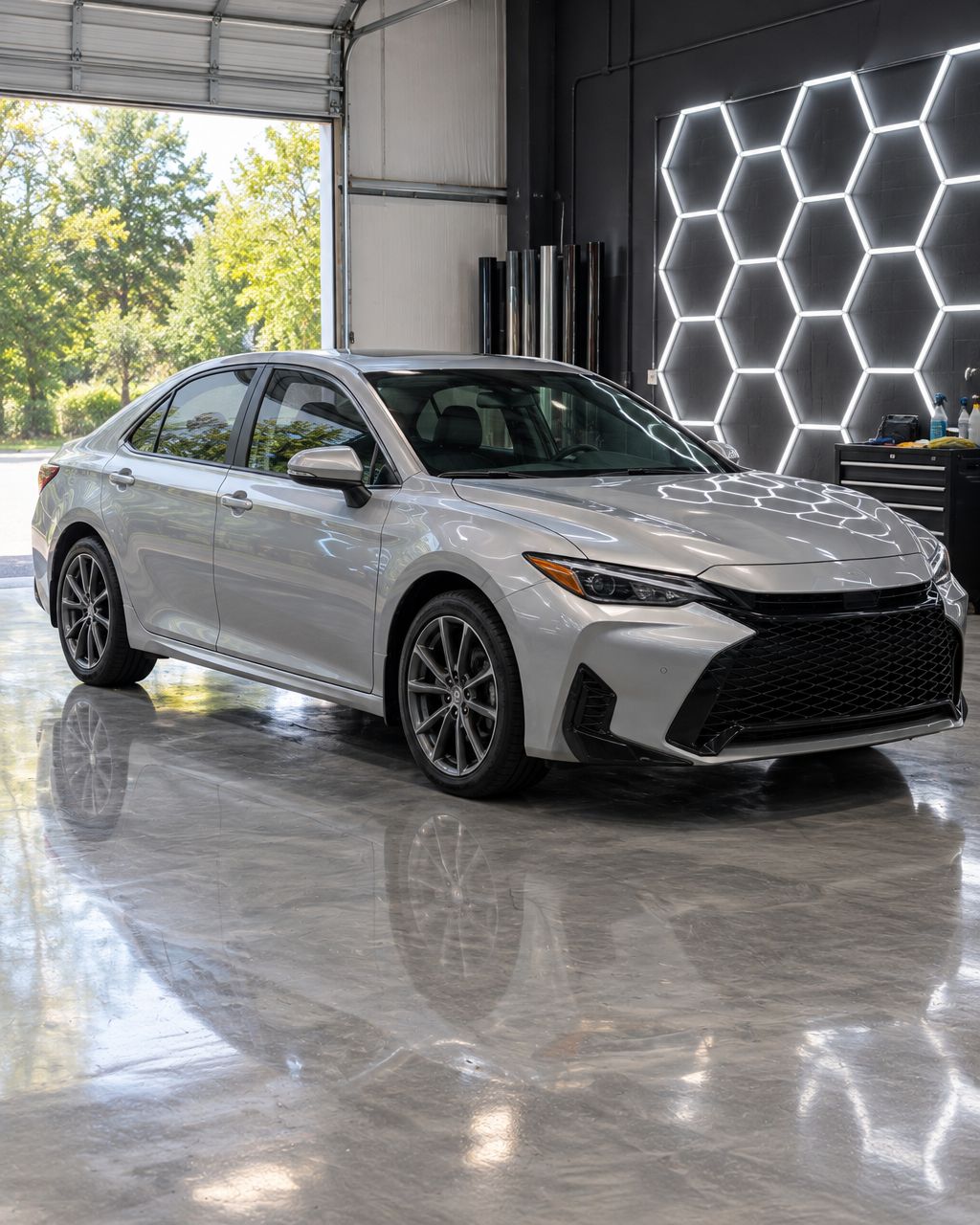
Tint two windows when your main problem is sunlight through the front doors and you are otherwise happy with the rear glass. Choose broader coverage when rear-seat comfort and sunlight through untreated side and rear windows matter too. Neither choice automatically includes the windshield or sunroof, so get the exact glass coverage in writing before comparing quotes.
- For window tint in Magnolia, TX, choose coverage around the seats and windows causing discomfort.
- Two-window tint targets the front doors; broader coverage addresses additional untreated glass.
- LeWolf offers Standard Ceramic and Nano Ceramic; compare film specifications separately from coverage.
- Factory-darkened rear glass does not tell you the performance of an added film.
- Ask whether the windshield, sunroof and old-film removal are included before booking.
Why this matters
Tired of driving with one arm in the sun? You do not necessarily need every piece of glass treated to solve that particular problem. But a front-door-only job will not address sunlight entering through the rear windows beside your passengers.
A useful tint quote separates two decisions: which windows need attention, and which film belongs on those windows. Buying the premium film for two doors is not the same purchase as covering more glass with a different film. Neither is automatically the better value.
For a 2026 coverage comparison, use the current window tinting cost guide as the starting point. Then ask for a vehicle-specific written scope rather than assuming every shop means the same thing by a full-car package.
Window tint in Magnolia: tint two windows or the whole car?
Start with the problem you can point to from your normal seat. If the front doors are the untreated glass beside the driver and front passenger, treating those windows is a focused first step. If you routinely carry people in the back, inspect their side windows and the rear glass before deciding that two doors are enough.
| Coverage choice | Best for | What it addresses | Main limitation |
|---|---|---|---|
| Two front-door windows | Drivers satisfied with their existing rear glass | Sunlight entering through the two treated door windows | Leaves other glass unchanged |
| Full side-and-rear coverage, as specified in the quote | Households wanting film across the passenger compartment | Additional side and rear glass included in the written scope | Does not automatically mean windshield or roof glass |
| Separately quoted additional glass | Drivers with a specific remaining source of sunlight | A windshield or roof concern assessed individually | Requires its own suitability, scope and compliance checks |
This is a coverage comparison, not a promise of a particular cabin temperature. Weather, vehicle glass, parking conditions and the selected film all affect what you notice. Ask the installer to explain the limits as clearly as the benefits.
Choose two windows for a front-seat problem
Two-window coverage makes sense when your concern is concentrated beside the front occupants. You might like the existing rear appearance and rarely carry back-seat passengers. In that situation, there is no reason to buy additional coverage solely because a larger package exists.
The limitation is straightforward: untreated glass stays untreated. Sunlight through the rear or roof does not stop entering because the front doors now have film. Be clear about what you expect before deciding the smaller job solves everything.
Before booking, confirm:
- Which two panes are being quoted.
- Whether either pane already has aftermarket film.
- The exact film and shade proposed.
- How the finished front glass will be checked for compliance.
- Whether a closer visual match to the rear glass is realistic.
Choose broader coverage for more seats and more glass
Broader side-and-rear coverage deserves consideration when rear-seat passengers also complain about direct sunlight. It can also be useful when the vehicle has untreated rear glass and you want a consistent film selection across the quoted windows.
The strongest reason to choose it is coverage you will actually use. A child who rides beside an untreated rear side window has a different need from a solo commuter whose main complaint is sunlight at the driver's door.
The trade-off is a larger job, not a guarantee that every surface or every passenger feels identical. Ask which small fixed windows, rear panes and existing film are part of the package. A written list prevents a visual misunderstanding at pickup.
Keep film grade separate from window count
Standard Ceramic is the lower-priced ceramic tier in LeWolf's 2026 automotive offering. Nano Ceramic is the premium, higher-performance tier. Those names do not replace the specifications of the particular film and shade proposed for your glass.
| Film choice | Best for | Useful comparison | Limitation to check |
|---|---|---|---|
| Standard Ceramic | Drivers prioritizing the lower-priced ceramic tier | Published performance for the proposed film and shade | Do not assume it matches the premium tier's specifications |
| Nano Ceramic | Drivers considering a higher-performance option | What measurable improvement the quoted film provides | The upgrade needs a benefit relevant to your driving |
LeWolf window tint installation suits Magnolia drivers who want Standard Ceramic and Nano Ceramic explained against their actual coverage needs. That is a more useful buying test than simply asking for the darkest film or the largest package.
Ask for total solar energy rejection, which describes how much solar energy the filmed glass rejects, and visible light transmission, which describes how much visible light passes through. The manufacturer's published figures should identify the film and test conditions. Do not treat a single infrared percentage as the entire comfort story.
Compare like with like before upgrading
A fair 2026 comparison holds coverage steady. Ask for the same windows quoted in Standard Ceramic and Nano Ceramic, then compare the actual difference in film performance and terms. Otherwise, you are changing coverage and product together without knowing which explains the difference.
If your budget forces a choice between more glass and a higher film tier, return to the problem. A premium treatment on the front doors leaves the rear glass unchanged. Broader coverage in another tier addresses more panes, but its performance still needs to meet your expectations.
Why the right coverage varies by vehicle
The right answer is not determined by the badge on the hood. Two similar-looking vehicles can have different existing glass or aftermarket film, and two owners can use their cars very differently.
- Passenger use: A solo commuter and a family with regular rear-seat passengers have different priorities.
- Existing glass: Factory-darkened rear glass and clear rear glass are different starting points.
- Existing film: A previous installation needs to be identified before planning replacement or additional work.
- Sunlight direction: Front-door sunlight, roof exposure and rear-seat glare are separate complaints.
- Visibility preferences: A shade that looks appealing outside still needs to suit the driver's view from inside.
- Package definition: The specific windows listed in the quote matter more than the package name.
Describe your normal route and when the glare bothers you. A drive along FM 1488 with low sun at the driver's side presents a different question from a parked vehicle with broad roof exposure. This helps the installer discuss coverage without promising that tint eliminates every source of heat.
Does factory privacy glass mean the rear windows are finished?
No. Factory-darkened glass describes the appearance of the original glass; it does not identify the performance of a proposed aftermarket film. Existing glass can already have relevant properties, so the useful question is what an added film would change on your particular vehicle.
Do not assume dark rear glass does nothing, and do not assume it does everything. Ask what is already present and which published specifications support adding film. Avoid making the decision from a side-by-side photograph alone.
If your main goal is matching the front and rear appearance, say so. The same film can look different over different underlying glass, and the front windows still need a compliant finished result. A visual match is a separate objective from reducing solar energy through additional panes.
What does a full-car tint package actually include?
A full-car label is not a pane-by-pane specification. In LeWolf's published 2026 pricing, windshield, sunroof, other unlisted glass and tint removal require an exact quote. Do not add those items to a package in your head because the word full sounds all-inclusive.
Ask the shop to name the windows. If there is a panoramic roof or old film on the rear window, include that information before the appointment. The quote should explain the work rather than leaving you to discover its boundaries after arriving.
Use this short booking checklist:
- Give the year, make, model and body style.
- Identify any factory-darkened glass and existing film you know about.
- Name the seats where heat or glare causes trouble.
- Request the exact windows included in each coverage option.
- Confirm the film, shade, warranty terms and any removal work.
- Ask about vehicle-specific installation and aftercare instructions.
You do not need to diagnose the glass yourself. Clear photos and a practical description of the problem give the installer a better starting point than asking for the best package without defining best.
Three situations that make the choice clearer
You mainly drive alone and like the rear glass
Start by comparing the front-door option. Ask whether it addresses the direct side-window sunlight you notice and what remains unchanged elsewhere. Broader coverage should earn its place by solving another concern, not by appearing higher on a menu.
You regularly carry children or adults in the back
Have the rear glass assessed alongside the front doors. Ask what an added film would do over the existing glass, including the effect on the view out. Do not treat rear-seat comfort as automatically solved by tinting the driver's area.
You want less glare but dislike dark windows at night
Make visibility part of the consultation before choosing a shade. Darkness and heat rejection are different specifications, and the darkest-looking option is not a substitute for reading a film's data. Discuss the conditions in which you drive and compare appropriate samples.
FAQ
Should I tint just two windows or the whole car?
Tint two windows when the front doors are your main concern and you are satisfied with the rear glass. Consider broader coverage when additional side or rear glass also needs attention.
Will front-window tint make the whole car cool?
Front-window tint only changes the performance of the treated glass. Other windows, the windshield and the roof remain separate sources of sunlight unless they are also addressed.
Is two-window tint automatically the best value?
No. Two-window coverage is good value when it solves the problem you have; it is incomplete value if you still need untreated rear glass addressed for passengers.
Can I choose Nano Ceramic on just the front doors?
LeWolf lists two-window options in both Standard Ceramic and Nano Ceramic. Confirm the proposed film, shade and suitability for your vehicle with the installer.
Does full-car tint include my windshield and sunroof?
Do not assume it does. LeWolf asks customers to request an exact quote for windshield, sunroof and other unlisted glass, so get those items named in writing.
Should I put film on factory-darkened rear windows?
Have the existing glass assessed first. Its appearance alone does not tell you whether an added film provides a worthwhile change for your goals.
Can I make the front windows exactly as dark as the rear?
A visual match is not guaranteed, and the finished front glass must meet the applicable rules. Ask the installer to check the glass and explain suitable shades rather than selecting by appearance alone.
One last thing
A tint package is a list of windows, not a temperature guarantee. For a 2026 installation decision, ask the shop to point to the glass that will change and the glass that will not. That simple conversation is often more useful than choosing between two package names.
LeWolf Window Tint & Film Solutions works from 5523 FM 1488 Rd, Suite B, Magnolia, TX. Bring the coverage question, your vehicle details and the problem you want solved; ask for the film-specific information before deciding whether to expand the job.