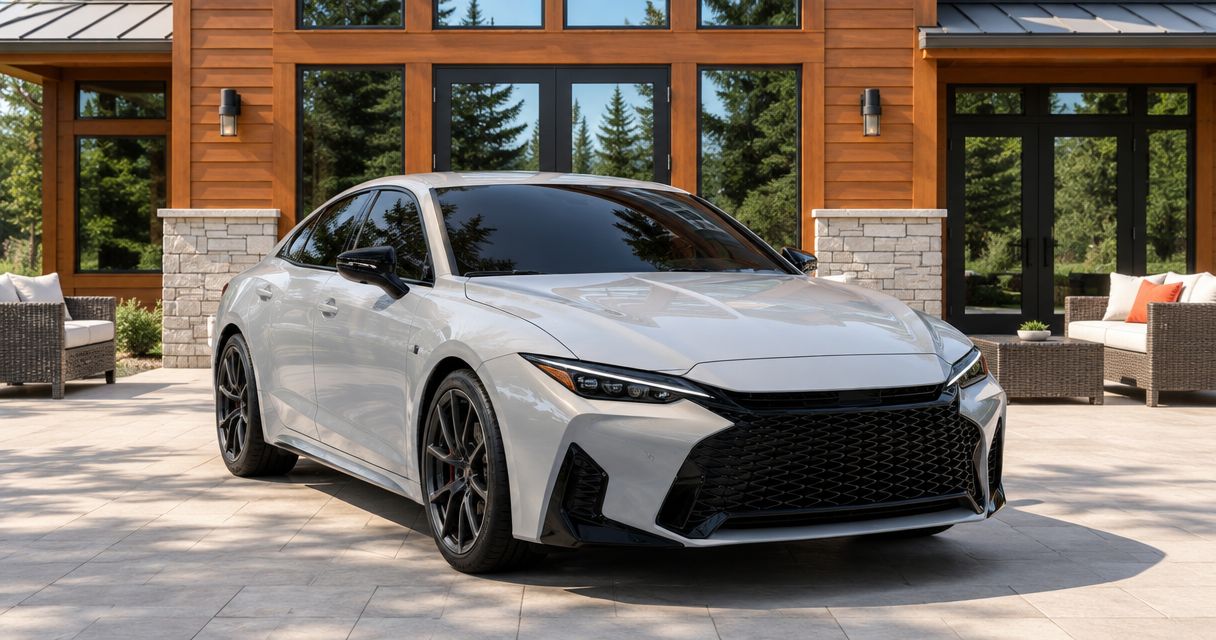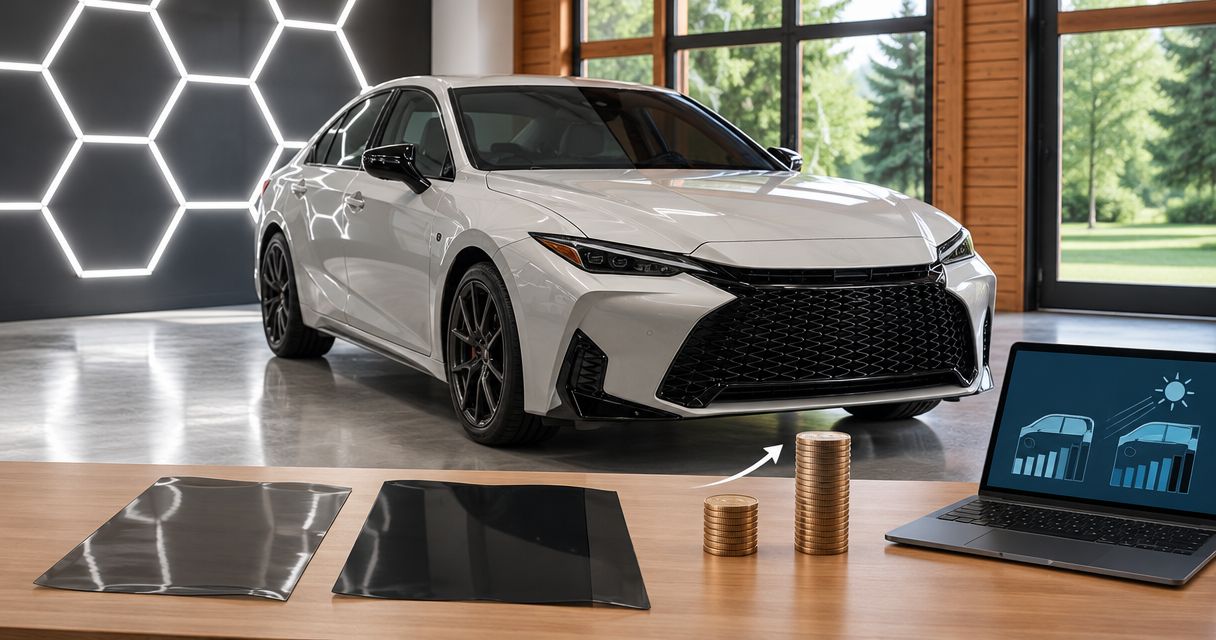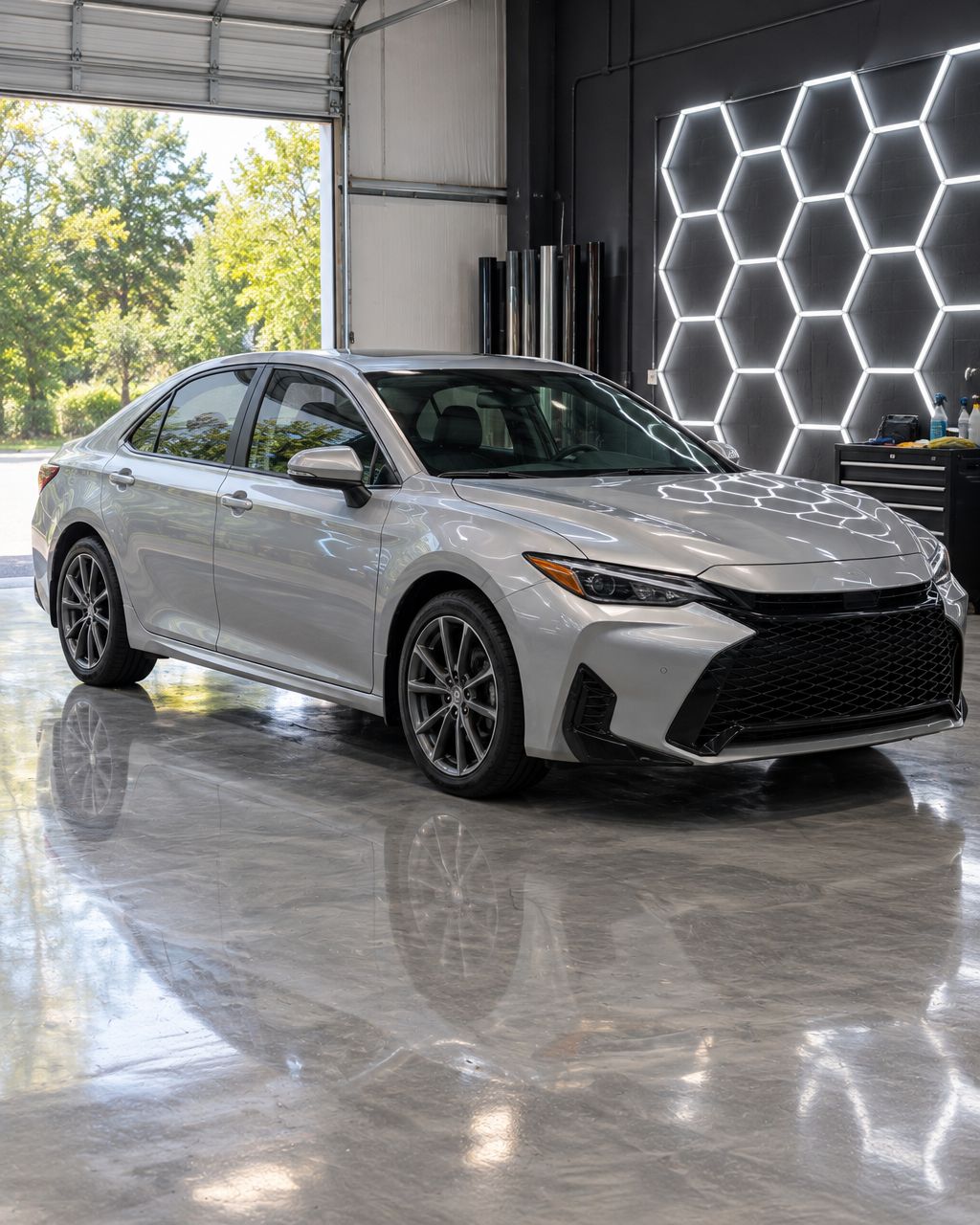
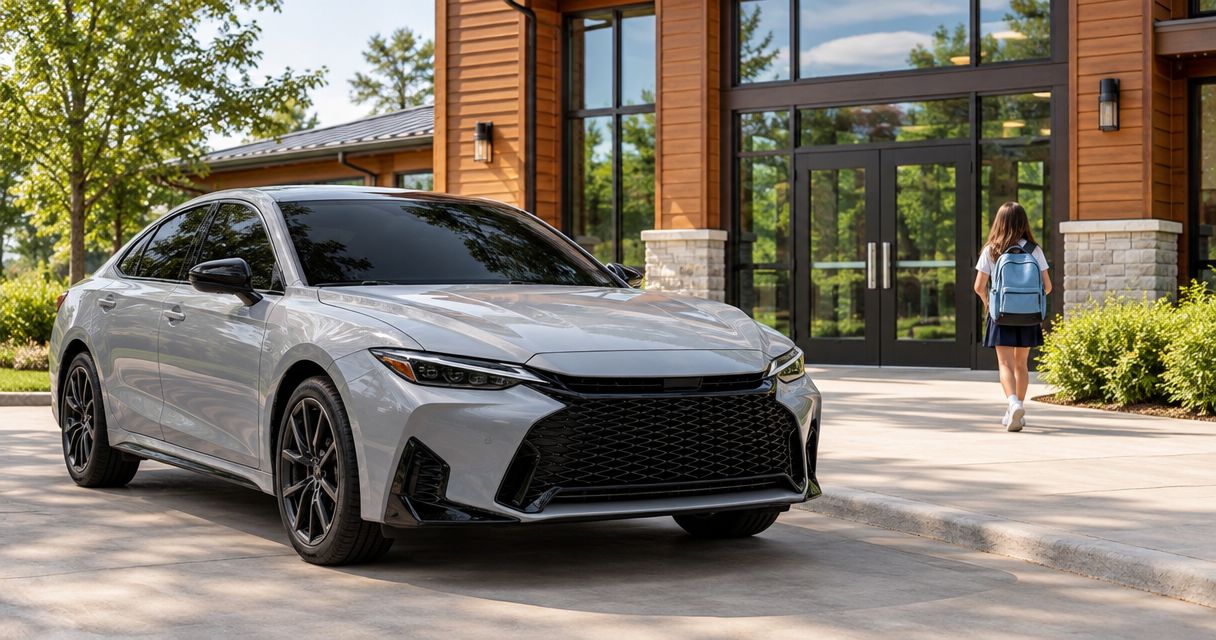
School-run window tinting is the installation of automotive film to reduce harsh sunlight during pickup and drop-off without sacrificing the visibility you need behind the wheel. If glare follows you through The Woodlands in 2026, start with the windows causing the problem—not the darkest package on the quote.
- For window tinting The Woodlands families need, prioritize glare control, legal visibility, and clearly defined installation coverage.
- LeWolf provides Magnolia-based, 3M-authorized window tint installation for drivers in the greater Houston and The Woodlands area.
- Compare film specifications at similar shades; darkness alone does not establish heat rejection.
- Choose front-window coverage for a localized problem; assess rear-seat exposure before choosing broader coverage.
Why window tinting matters for school-run families
A school run presents competing needs: you want less direct sunlight on passengers, but you still need to see pedestrians, cyclists, and vehicles around pickup lanes. A comfortable afternoon ride is not a good trade if the same film makes a rainy morning harder to see through.
LeWolf is best for The Woodlands drivers seeking Magnolia-based, 3M-authorized window tint installation. Choose the film and coverage around your route, passengers, and visibility needs rather than treating the authorization as a substitute for a detailed quote.
Start with this guide to tinting two windows or the whole car if your main question is how much glass to cover. The right scope depends on where the troublesome sunlight enters.
For a 2026 buying decision, separate three issues: visible glare, solar heat, and the installed package. They overlap, but they are not interchangeable. A darker appearance does not tell you which film offers better heat rejection, and a film specification does not tell you which windows an installer has included.
How to choose tint for your school run
1. Identify where sunlight disrupts your drive
Before requesting quotes, note when the problem happens and which window admits the light. Make those observations while parked, or ask another adult passenger to record them. Do not photograph glare while driving.
Distinguish direct sun from reflections off another vehicle or the road. Side-window film addresses light passing through that window; it does not remove every source of glare in your field of view.
Use your actual route through The Woodlands, Magnolia, Conroe, or Tomball as the starting point. A broad complaint about a hot car gives an installer less direction than knowing that your child's seat receives direct afternoon sun through the rear passenger window.
- Record whether the problem occurs during morning drop-off, afternoon pickup, or both.
- Identify the affected seating position and window.
- Note whether glare happens while driving, waiting in line, or parking.
- Describe heat discomfort separately from brightness.
2. Set your visibility and legal requirements
Start with the Texas Department of Public Safety's window-tint standards, not a photograph of another car. For front side windows, Texas specifies at least 25% visible light transmission, measured through the glass and film together. Visible light transmission, or VLT, means the proportion of visible light that passes through.
That combined measurement matters. Applying film labeled 25% to glass that already reduces light does not automatically produce a compliant finished window. Ask the installer to evaluate the existing glass before recommending a shade.
For your 2026 installation, have the installer confirm the requirements for each window and your vehicle type. Windshields and rear windows have different rules and conditions; do not apply the front-side-window threshold to every piece of glass.
- Ask for the expected combined glass-and-film VLT.
- Explain whether you regularly drive before sunrise or after dark.
- Check visibility concerns around mirrors, crossings, and pickup lanes.
- Confirm windshield restrictions separately from side-window requirements.
3. Compare film specifications before choosing a tier
Ask for the exact film name and its technical sheet. You can compare those documents yourself without relying on package labels such as entry, premium, or top tier. Those labels do not establish what the film does.
For heat comparisons, look for total solar energy rejected, often shortened to TSER. It describes the share of incoming solar energy the glazing system rejects under the stated test conditions. Compare films at similar VLT and on the same testing basis; otherwise, the figures do not provide a clean comparison.
Ceramic describes a film construction, not a guaranteed level of performance. When considering window tint installation services, ask LeWolf to identify the specific film proposed and explain what the next tier changes. Spend more only when the documented difference addresses your problem.
- Request the manufacturer and exact film series in writing.
- Compare VLT and TSER at similar shades.
- Ask what any infrared-rejection figure measures.
- Separate published film specifications from promises about cabin temperature.
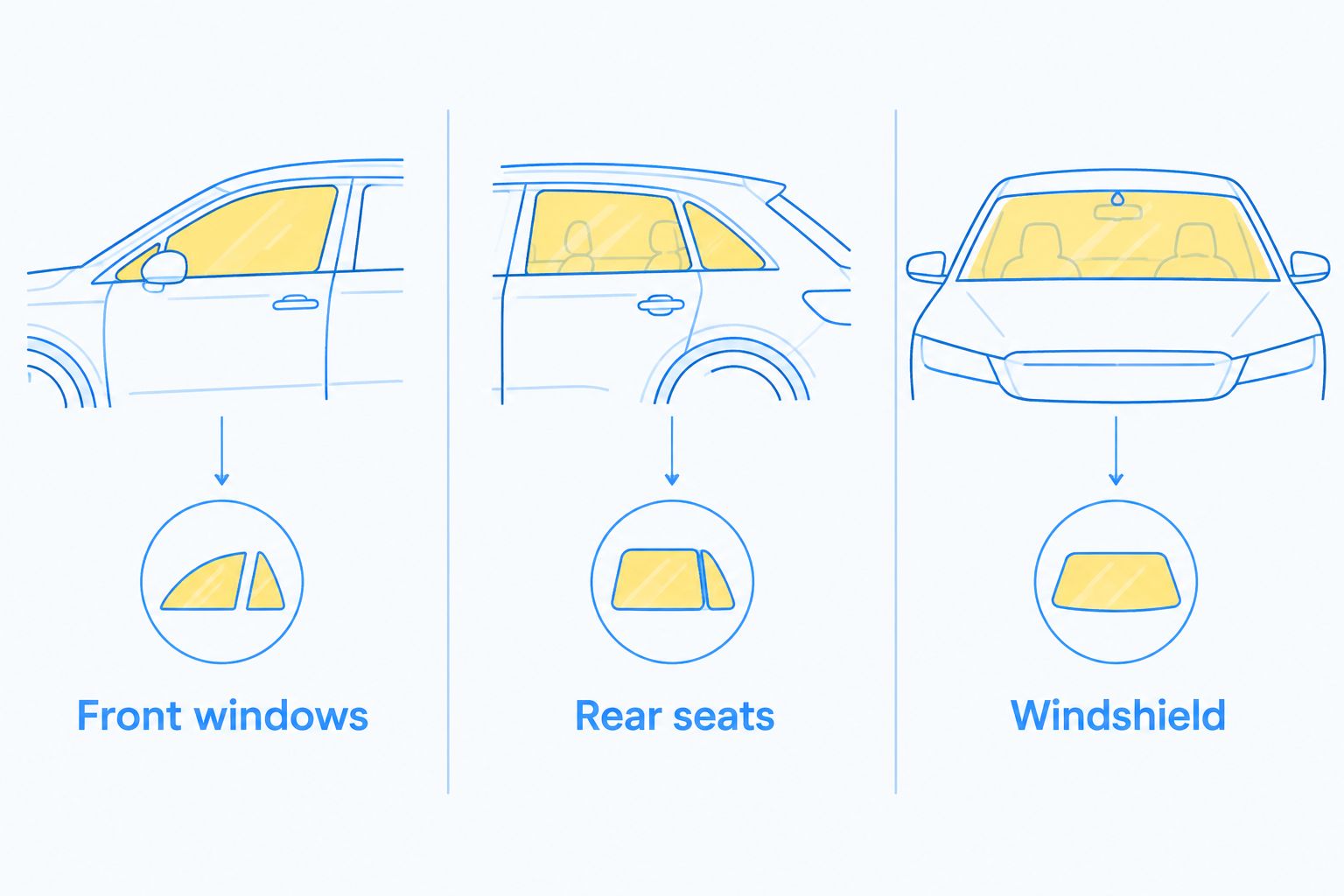
4. Choose coverage around the occupied seats
Sketch your vehicle's windows and mark where people sit during the school run. This simple check prevents a front-window-only quote from being mistaken for a solution to rear-seat exposure.
Tinting the 2 front side windows is a narrower scope than treating side and rear glass. It can suit a front-seat brightness concern, but it leaves untreated rear glass unchanged. Broader coverage addresses more entry points for sunlight, while adding installation scope you should justify window by window.
Factory-darkened glass also deserves a separate conversation. Its appearance does not establish that it has the same solar-performance characteristics as a proposed aftermarket film. Ask what your existing glass already does before adding another layer.
- Name every window included in the quote.
- Identify rear-seat positions used by children.
- Ask whether small quarter windows are included.
- Treat the windshield and glass roof as separate decisions.
5. Compare quotes on an identical scope
Build your own comparison sheet before deciding which quote offers better value. An installed total means little when one proposal covers fewer windows, uses a different film, or leaves old-film removal unresolved.
For 2026 quotes, use 4 comparison checks: film identity, covered glass, preparation, and written terms. Ask whether existing film must be removed and whether that work is included. Do not assume every installer defines a complete vehicle package the same way.
A higher quote is not automatically better, and a lower quote is not automatically poor work. The useful question is what changes between the proposals. If an installer cannot explain the difference in plain English, keep asking before you authorize the job.
- Match quotes to the same vehicle and windows.
- Require the exact film series on each proposal.
- Separate removal work from new-film installation.
- Read any written warranty and care terms before booking.
6. Check the trade-off in realistic light
Ask to see film samples before choosing the appearance. A sample helps you discuss shade, but it does not recreate your windshield angle, existing glass, weather, or night-driving conditions.
Do not choose the darkest sample simply because afternoon pickup is uncomfortable. Your school-run car also handles wet roads, shaded streets, parking areas, and evening trips. Choose a shade you can live with across the whole day.
Keep expectations specific. Window film manages incoming light and solar energy; it does not turn a parked vehicle into a climate-controlled space. Never use tint as a reason to leave a child unattended in a vehicle, even briefly.
- View available samples in daylight rather than judging a phone photo.
- Discuss existing visibility difficulties before selecting a shade.
- Ask how the chosen film looks over your existing glass.
- Keep passenger comfort separate from child-safety decisions.
7. Request a written installation plan
Write a short brief containing your vehicle details, affected windows, and main complaint. You can send the same brief to each installer, making their responses easier to compare without repeating the whole conversation.
For LeWolf window tint installation, describe your school-run concern before selecting a package. The business serves the greater Houston and The Woodlands area from Magnolia; do not assume that a service-area reference means a separate shop in each city.
Use the booking page once you are ready to discuss the job. Before confirming, ask what preparation is needed, what the appointment covers, and which aftercare instructions apply to the selected film. Get any time estimate directly from the installer.
- Provide the vehicle make, model, and body style.
- Disclose existing aftermarket tint or damaged film.
- List the windows you want assessed.
- Request written coverage, film identity, and aftercare instructions.
Compare your window-tint options
Use this comparison to narrow your 2026 shortlist. These are buying approaches, not confirmed package names or a list of films offered by any particular installer. The exact film and installation scope still need to appear on your quote.
| Option | Best for | Practical advantage | Key limitation |
|---|---|---|---|
| Dyed film | Drivers prioritizing visible-light reduction | Provides a shade-based approach to brightness | Darkness alone does not establish strong solar-heat rejection |
| Ceramic film | Drivers comparing glare control with solar performance | Offers a construction category to assess through technical specifications | The ceramic label alone does not establish performance |
| Higher-specification ceramic film | Drivers whose shortlisted film shows a useful documented improvement | Lets you compare an upgrade against a specific comfort goal | An upgrade is hard to justify without comparable test data |
| Front-window-only coverage | Drivers with a localized front-seat concern | Limits the installation to the affected front glass | Leaves rear passenger glass untreated |
| Side-and-rear coverage | Families addressing sunlight across occupied rows | Includes more of the passenger compartment's glass | Requires a clearer window-by-window scope and separate windshield discussion |
Film type and coverage are separate decisions. You can choose a narrower installation with a particular film or broader coverage with another; compare both dimensions before accepting a package recommendation.
The best-value choice is the least extensive package that addresses your identified problem without compromising legal visibility. If rear-seat exposure is the issue, a better-specified front-window film alone does not address that untreated rear window.
Common mistakes school-run families make
Treating darkness as the heat specification
A dark appearance tells you about visible light, not the full solar-performance picture. Compare the exact film's documented properties instead of assuming the darkest option provides the greatest heat control.
Choosing only for afternoon pickup
The same vehicle must work on a dark morning or a wet evening. Balance the uncomfortable part of your route against the visibility required for the rest of your driving.
Buying front-window coverage for a rear-seat problem
A front-window package leaves other glass unchanged. If your child receives direct sun through a rear side window, include that window in the assessment rather than expecting front tint to solve it.
Comparing package names instead of included work
Two complete-car quotes can describe different windows and preparation. Ask for a written list, particularly when old film, quarter windows, a windshield, or a glass roof enters the conversation.
Expecting tint to replace cooling or supervision
Tint does not replace air conditioning or make an unattended parked vehicle safe. Treat reduced sunlight as a comfort measure, never as permission to leave a child in the car.
FAQ
What's the best window tint for school-run glare in The Woodlands?
The best choice reduces troublesome light through the affected windows while preserving legal, usable visibility. Compare exact film specifications, your existing glass, and the seats used during pickup and drop-off rather than choosing by darkness alone.
Is ceramic tint better than regular tint for a family car?
Ceramic tint is worth considering when its documented solar performance addresses your heat concern. Compare named films at similar visible light transmission; the ceramic label alone does not establish how much better one option performs.
Should I tint two windows or the whole car?
Choose front-window-only coverage for a problem confined to the front side windows, and assess broader coverage when rear passengers also receive direct sunlight. Have the quote list every included window so that package wording does not hide a coverage gap.
What does 25% VLT mean under Texas tint rules?
A 25% VLT measurement means that one quarter of visible light passes through the measured glazing. Texas front-side-window requirements apply to the glass and film together, so a film's label alone does not establish the finished window's compliance.
Will window tint keep my parked car cool during school pickup?
Window tint does not keep a parked vehicle safely cool on its own. It manages incoming solar energy, but you still need appropriate cooling and must never leave a child unattended in the vehicle.
Do factory-dark rear windows still need aftermarket film?
Factory-dark rear windows do not automatically need additional film. Ask the installer to assess the existing glass and explain what a proposed film adds before authorizing more work.
What should I ask LeWolf before booking window tint?
Ask LeWolf for the exact film, included windows, existing-film removal requirements, and written care terms. Describe your school-run glare concern and request confirmation of the finished glass-and-film legal requirements.
One last thing
Before your 2026 appointment, describe the problem without naming a film: afternoon sun through the passenger-side rear window is a more useful starting point than wanting the darkest tint. That gives the installer a defined problem to address—and gives you a clear way to judge the recommendation.
Ask LeWolf to explain any proposed upgrade against that same problem. If the explanation only changes the package label, request the underlying film specification before agreeing.